As part of a our first service design project, we were asked to pick an everyday object to build a service around. I chose a 'pillow' (probably becasue I love sleeping)—but also, an object so ordinary it’s often overlooked. The project spanned 3 months and aimed to transform the pillow into a holistic service touchpoint by deeply understanding user behaviors, rituals, and challenges around it.
Role
Service Designer & Researcher — Led end-to-end project from ethnographic research to speculative prototyping
For
Masters Project - Product Servitization
Year
2024
Challenge
Pillows have a vibe range of uses and an even wider range of options to choose from in the market. So,
How might we design a service around the pillow to help users find the perfect pillow based on their needs and sleeping habits?
Approach
The inquiry began with a survey (130+ responses) and 17+ interviews across diverse demographics. I mapped findings across five behavioral lenses—Actions, Environments, Interactions, Devices, and Personas. I found that the pillow served more than a physical function—it held emotional memory, cultural habits, and sensory preferences.
Actions – what users do around their pillow
Environments – where they sleep
Interactions – with their pillow and others
Objects & Devices – things that influence sleep
Users – their identities, roles, and routines
Emerging personas included:
“Comfy Sleeper” — prioritizes emotional security and nostalgia
“No-Nonsense Nester” — wants efficiency and hygiene
“Pillow Fashionista” — styles their bed like a canvasI began by treating the pillow not as a static product, but as an entry point into people’s sleep behaviors.
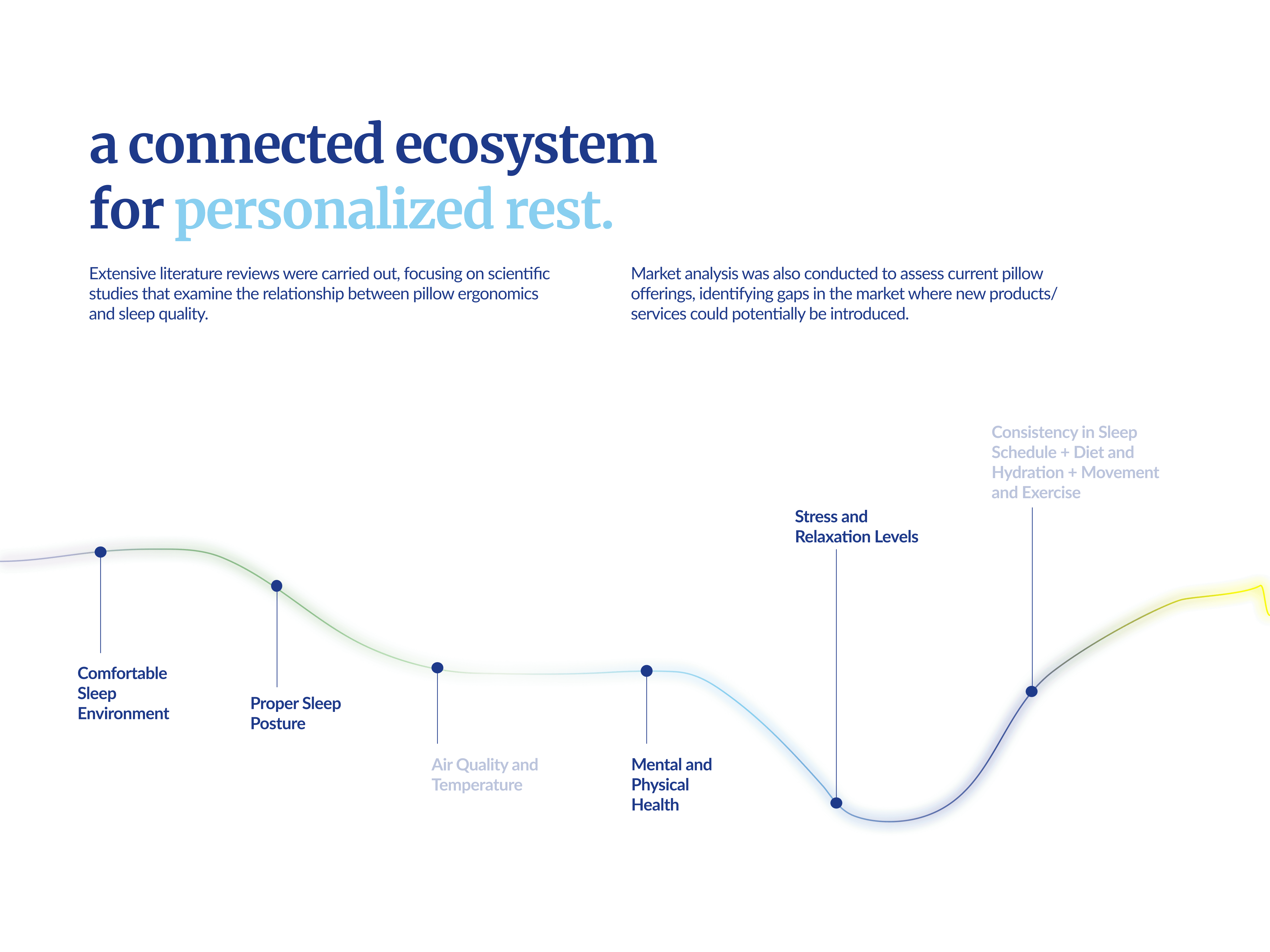
I structured my research around five key layers:
Process
I conducted:
A survey with over 130 respondents to understand general pillow behaviors
18 in-depth interviews across age groups, nationalities, and sleep styles
Observation and generative methods like journey mapping, card sorts, and KANO prioritization to uncover deeper emotional triggers
Key Insights
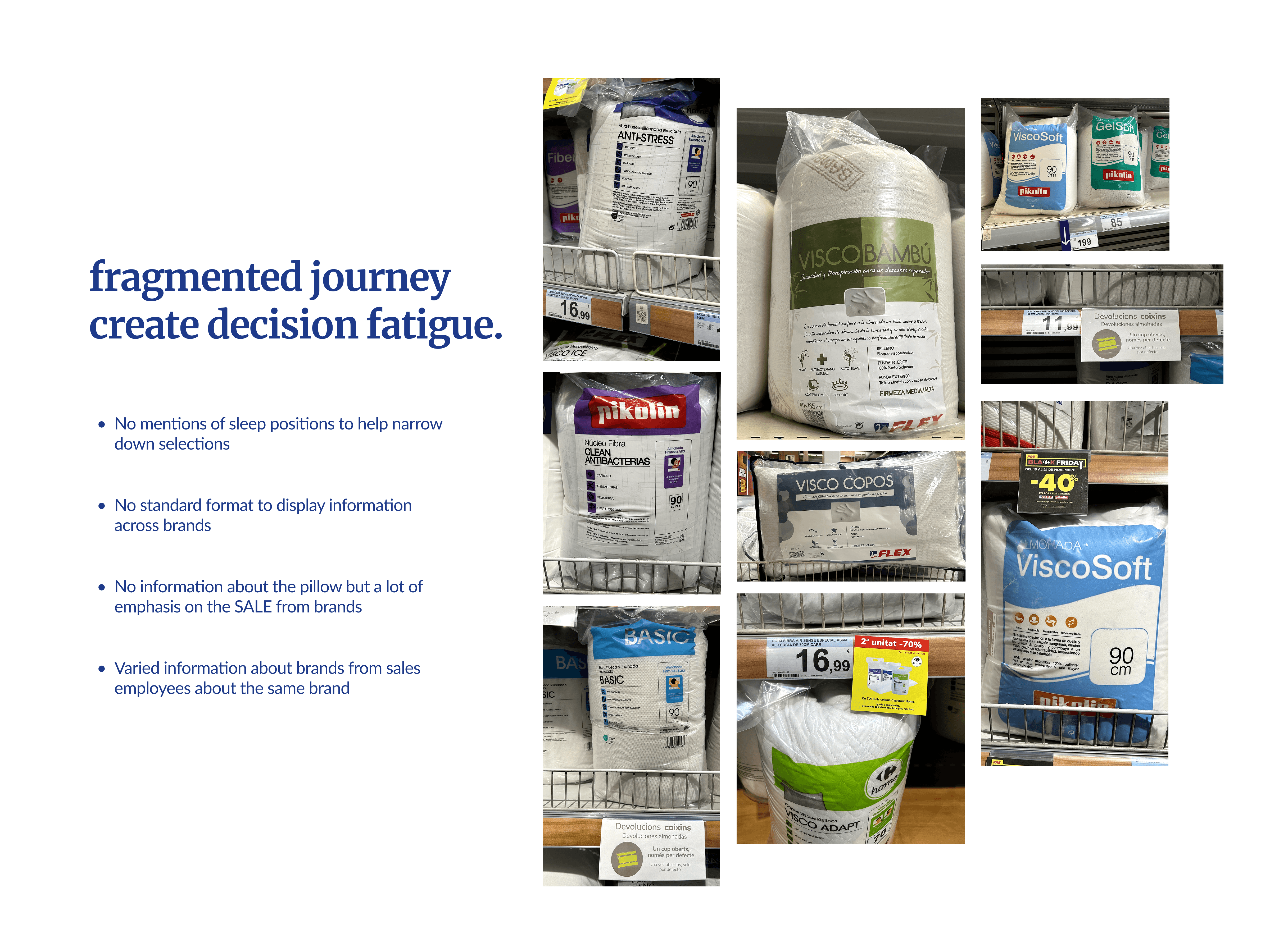
Most users didn’t know when or how to replace their pillow
Emotional attachments to “perfect” pillows were common but often irrational
Sleep struggles had less to do with pillows and more to do with disrupted pre-sleep rituals, discomfort, or the inability to wind down
Cleanliness and care practices were inconsistent but deeply valued when made convenient
Outcome
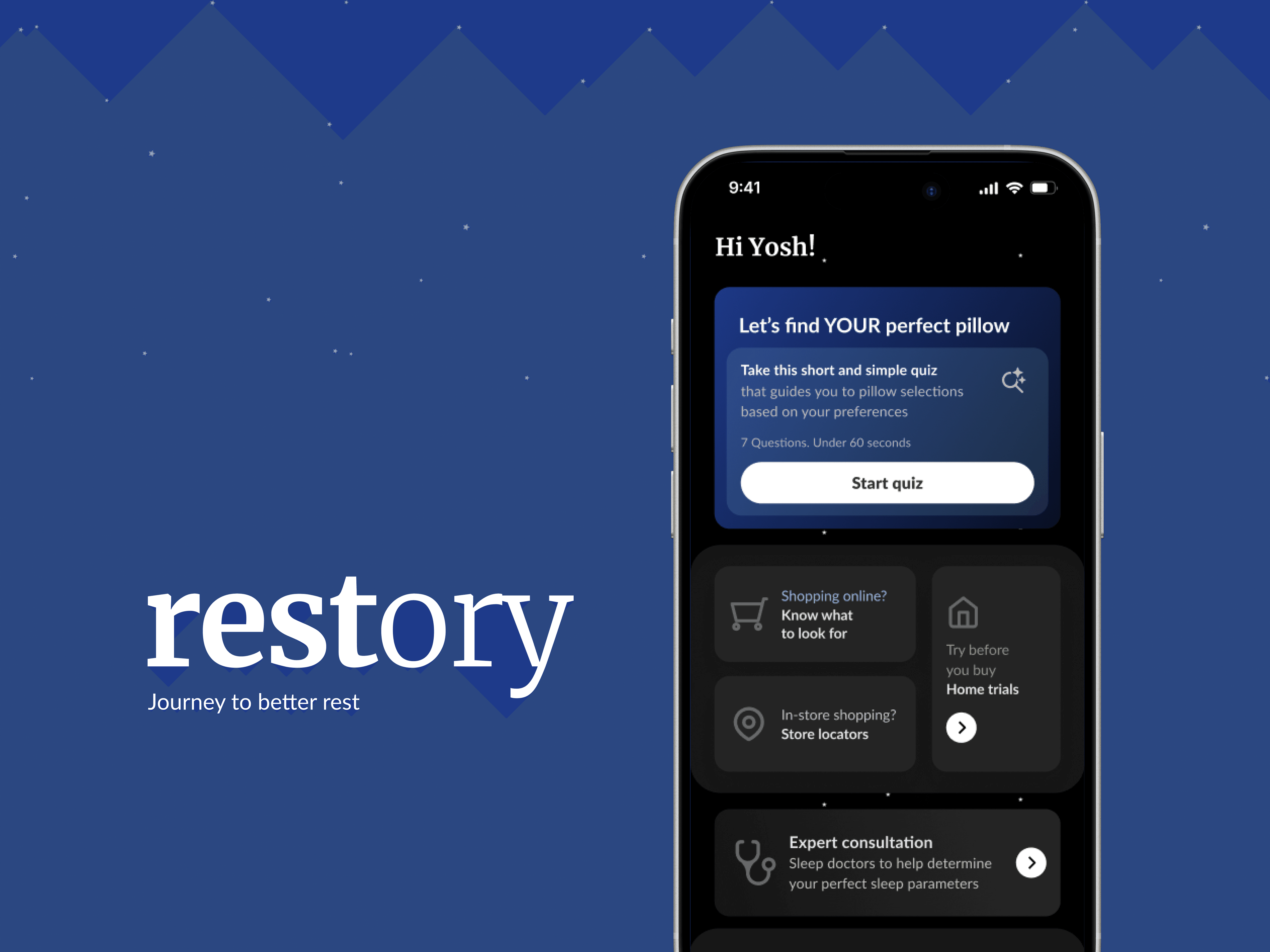
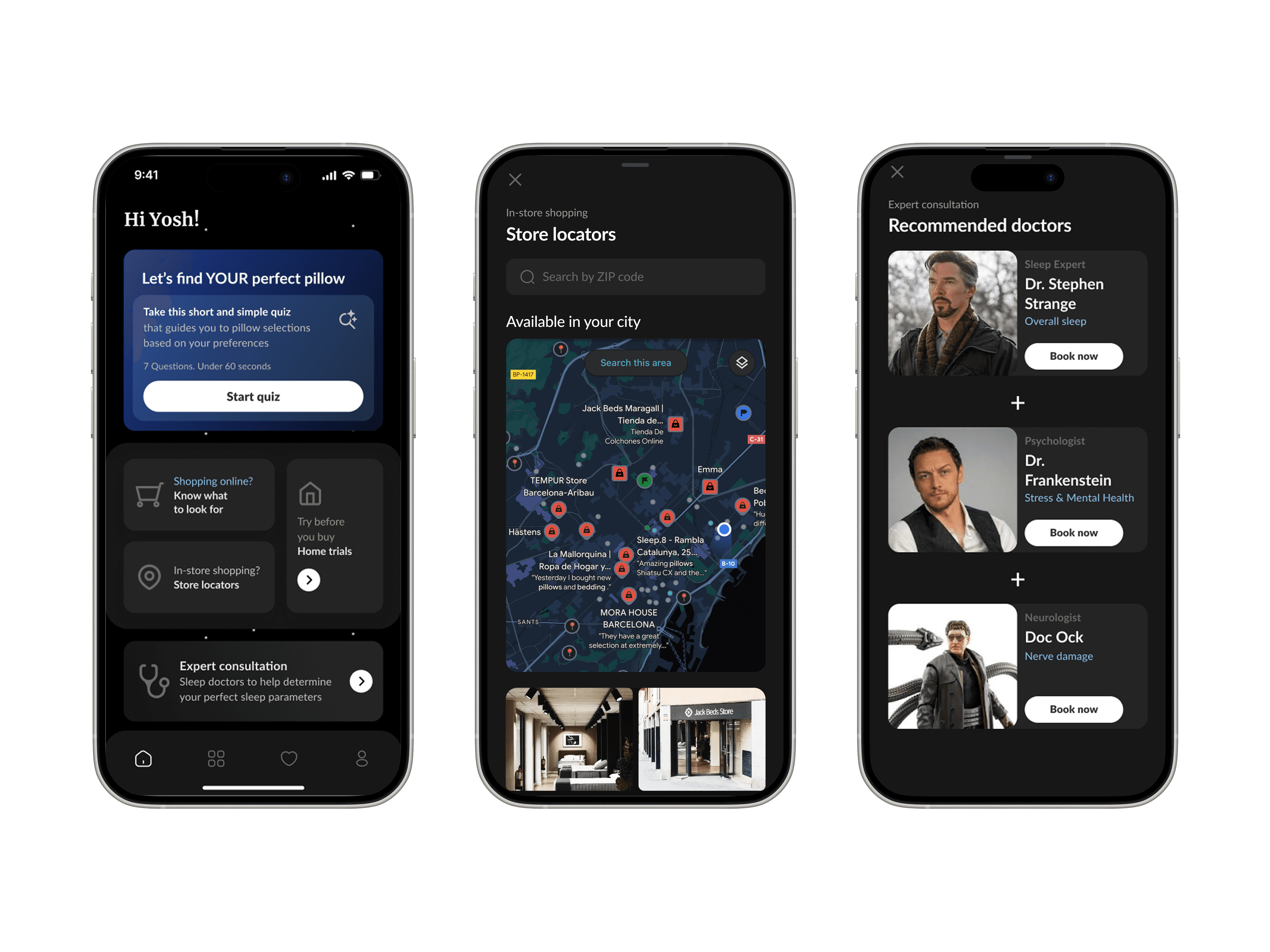
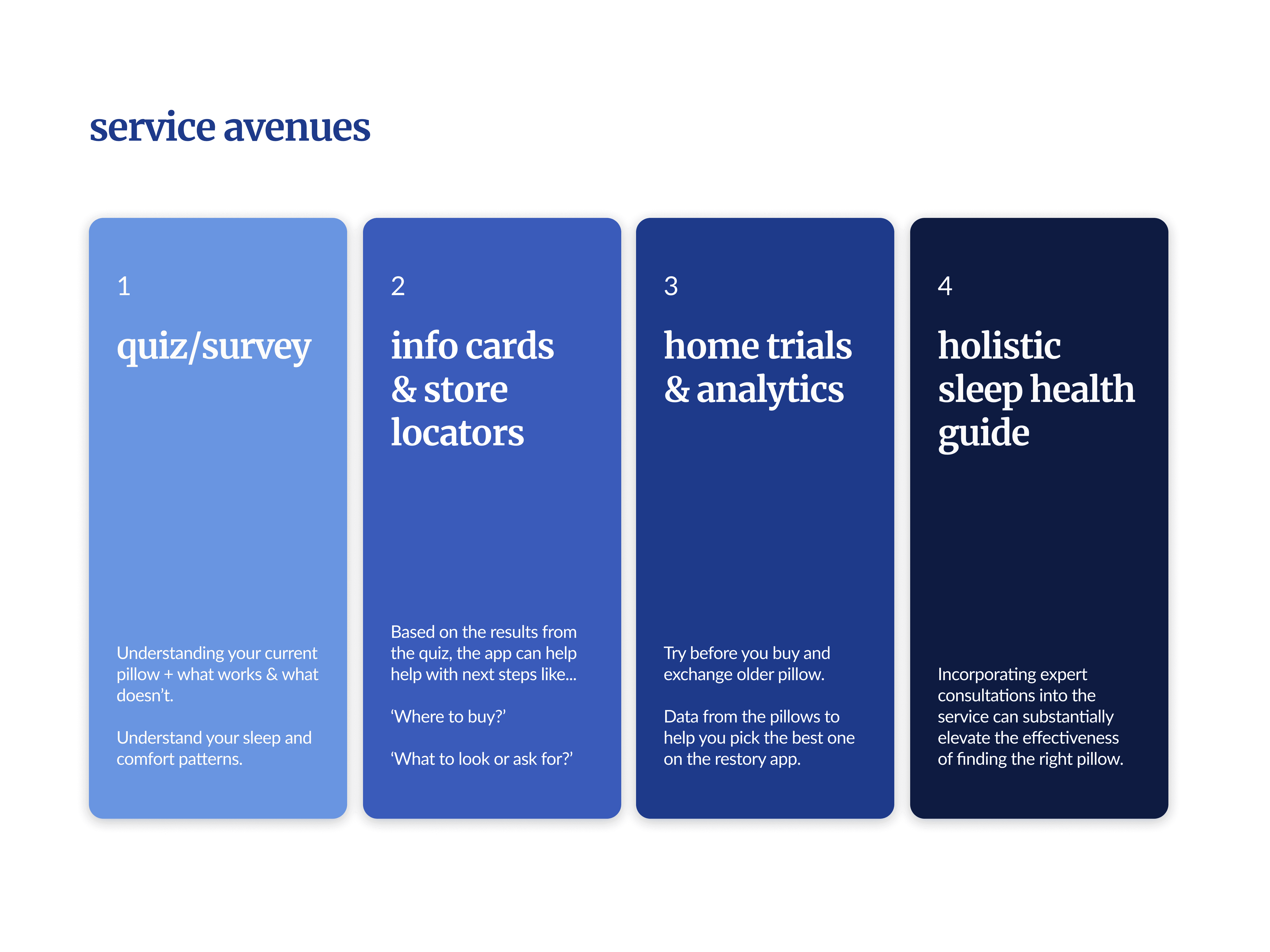
The final concept was a modular pillow service ecosystem consisting of the following:
Pillow subscription tiers based on usage type and sleep persona (e.g. Comfy Sleeper, No-Nonsense Nester)
A personalization quiz at onboarding to match pillow materials, sizes, and features to the user’s habits
Access to a mobile app offering breathing exercises, ambient soundscapes, and seasonal pillow care prompts
A reuse program that collects worn-out pillows and donates suitable ones after sterilization or recycles materials responsibly
Optional sensor-embedded cases to track sleep postures and recommend adjustments over time
The service design emphasized minimal user effort, emotional comfort, and modular upgrades—fitting into both fast and slow sleep routines.
This concept was showcased at our Service Systems exhibition and received praise for its emotional grounding and realism. My professors noted its balance between product touchpoints, digital UX, and logistics flow.
Takeaways
This project helped me think of comfort not just as physical but ritualistic and emotional. The pillow became a proxy for our most vulnerable state—sleep. Designing around it required me to ask: what makes people feel safe enough to rest? It also made me realize that meaningful services don’t always need to be tech-first—they need to be human-first.
Future Scope
I'd love to explore collaborations with D2C brands like The White Willow or Wakefit to prototype this system in the Indian market. The concept could also expand to caregiving environments, offering personalized comfort for the elderly or children. With careful integration, even wearables could feed into the companion app to adjust sensory cues based on stress or restlessness.